
I got this Canon EOS 500N in the summer of 1998. From the days I knew nothing about cameras and specs, which was positive as it let me focus on the fundamentals.
With this camera I had one intent only: I needed a reliable, light and practical camera that could follow me everywhere during my university years.


As an Architecture student in Portugal, I had many projects that required the support of photos. I had my dad’s Canon AE-1 Program that I featured here before, together with two fast primes: a 28mm f/2.8 and a 50mm f/1.8, both from Canon.
This was a very good camera set. Yet as much as I liked the Canon AE-1 Program, it was not practical for me because I had to change lenses repeatedly in the field. Sometimes I needed the 28mm, sometimes the 50mm. It was annoying.
So in the summer of 1998, while I was in Macau for holidays, I went to local camera store and walked out with the Canon EOS 500N and a kit lens: the EF 28-80 f/3.5–5.6.


Canon EOS 500N
The Canon EOS 500N is a budget friendly camera from the lower tiers of the EOS system. Everything in this camera is made of plastic, even the lens mount.
Being 100% made of plastic means the camera is extremely light. It was exactly what I needed.
Furthermore, it has autofocus (very slow, but it didn’t matter), auto film advance (very slow as well, but it didn’t matter) a built-in flash and, most importantly, a zoom lens.


The zoom lens made all the difference to me, going from 28mm up to 80mm. No more changing lenses out there in the field, God bless.
Replacing the Canon AE-1 Program with the Canon EOS 500N gave me the practicality I needed.
Review
For the sake of writing a review I could load a roll of film and start shooting now, then publish the photos and let you know my views.
But guess what? I don’t need to do this.
I shot thousands of photos with this camera in the past. I know exactly how it feels. I have enough mileage for a real-life review based on my memory alone.

This camera followed me everywhere. Film was cheap those days: I’d buy boxes of them here in Macau for less than MOP$20 (USD$ 2.5) each 36-exposure roll. I’d then happily shoot them in Portugal.
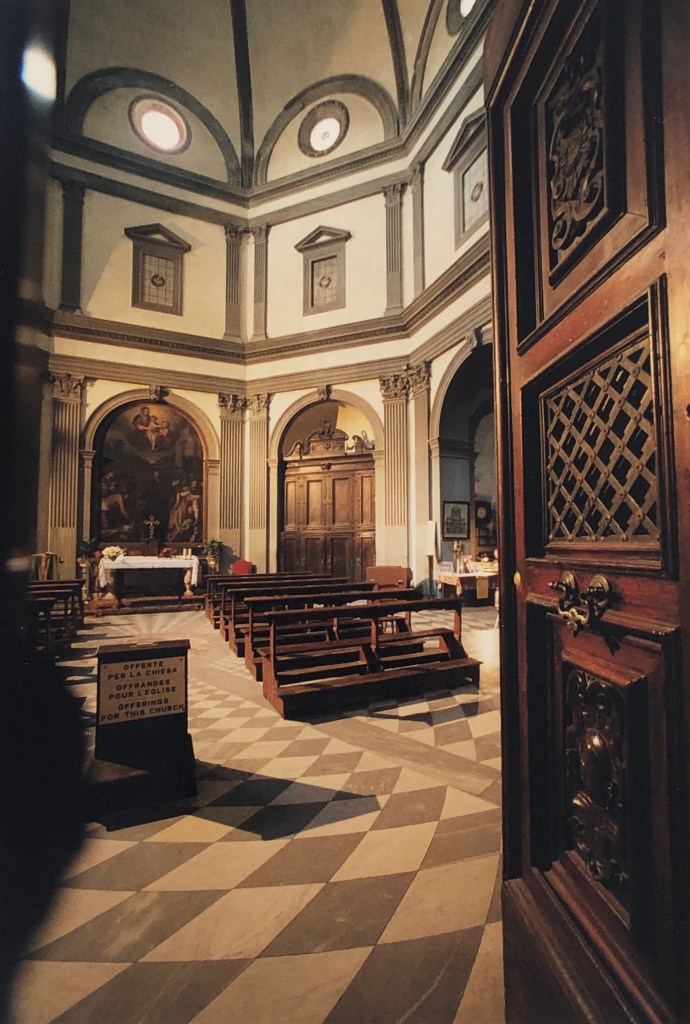
Then in Italy, where I was an exchange student. I traveled to all corners of that beautiful country. The EOS 500N came with me every time and never failed me. We went to other places in Europe as well.
Those were the days I could travel freely with my friends with no return date. We’ll get into the train and just keep going, visiting places in daytime, then sleeping in the train at night. We’d keep going for weeks ’till ok, time to go home, no more clean T-shirts.


Using the EOS 500N
I’ll start with the viewfinder: it’s smallish and not luminous, although still perfectly usable.
It offers only 90% coverage of the actual film frame area. That was the practice back then: the flagship EOS 1 was the only Canon with 100% coverage. Large and luminous viewfinders were only for pros.
The rubber eyecup surrounding the viewfinder didn’t work well with my glasses. I removed it and only God knows where it is now.
The EOS 500N was made to be used with the kit lens. This is how it was designed to be sold and used. Hence, everything is made of plastic: the body, the lens, all plastic.
And it works well this way. If you attach a higher-end, heavier lens – like I did later with a Sigma 14mm f/2.8 – the body’s plastic hollowness is highlighted. The camera becomes unnatural to handle and goes off balance, front heavy.
On its own, with the kit lens, it feels perfect. The rubberized grip allows a firm hold on the entire combo.
There is a dial with preset modes for portrait, macro, landscape, sports and night scene. The icons are self-explanatory. Then, rotating the same dial, you go through the several exposure modes. It’s basically PASM, they are all there.
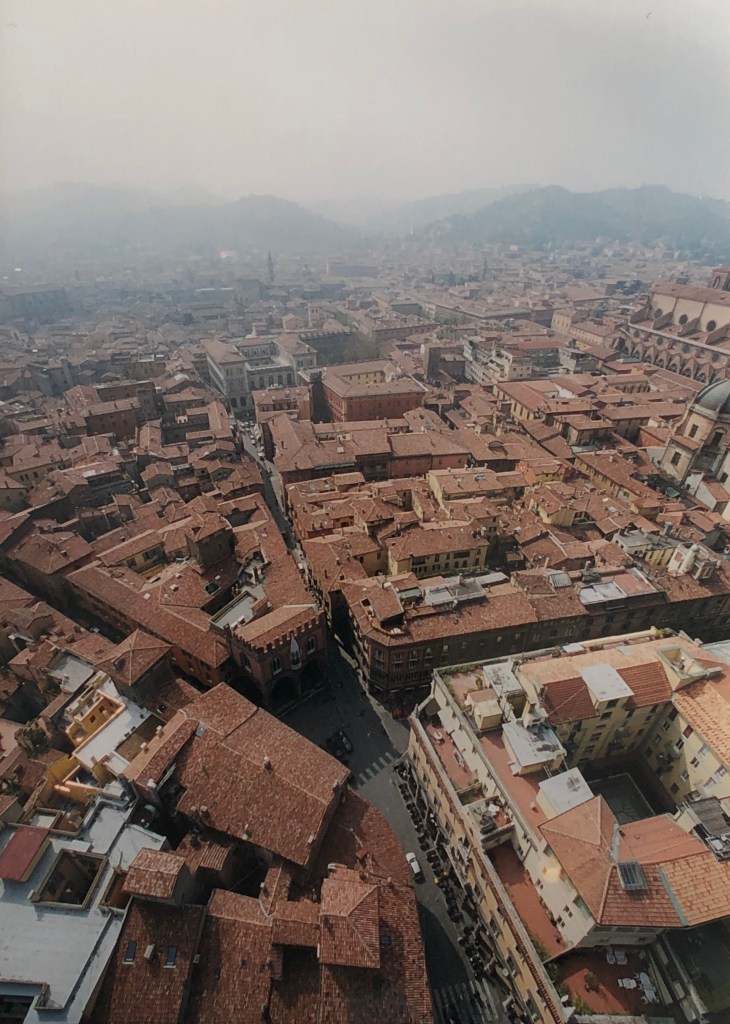
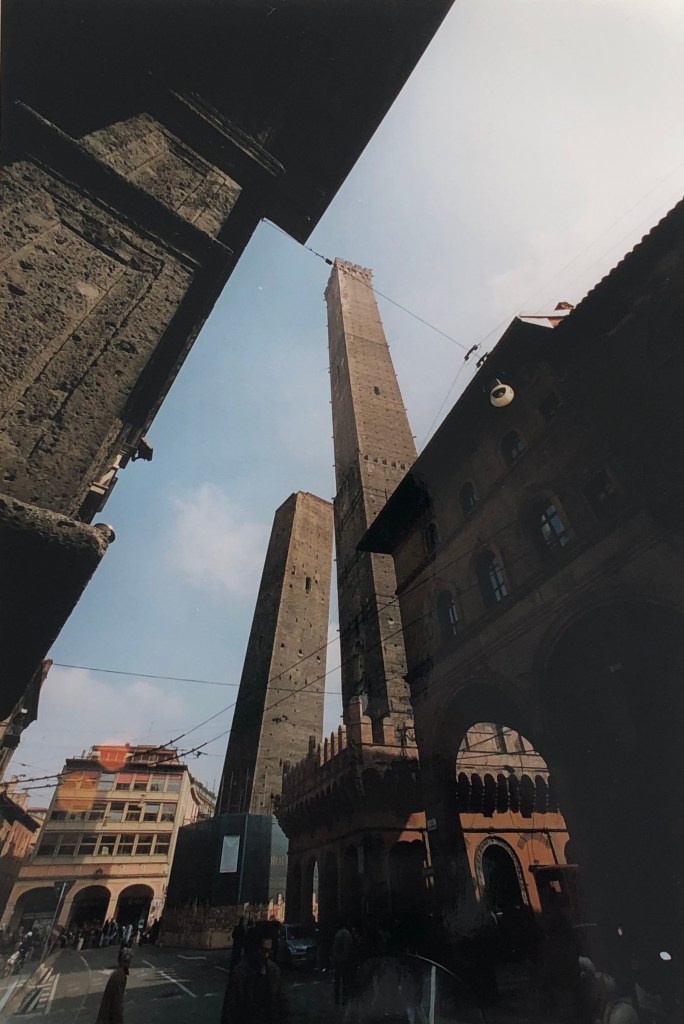
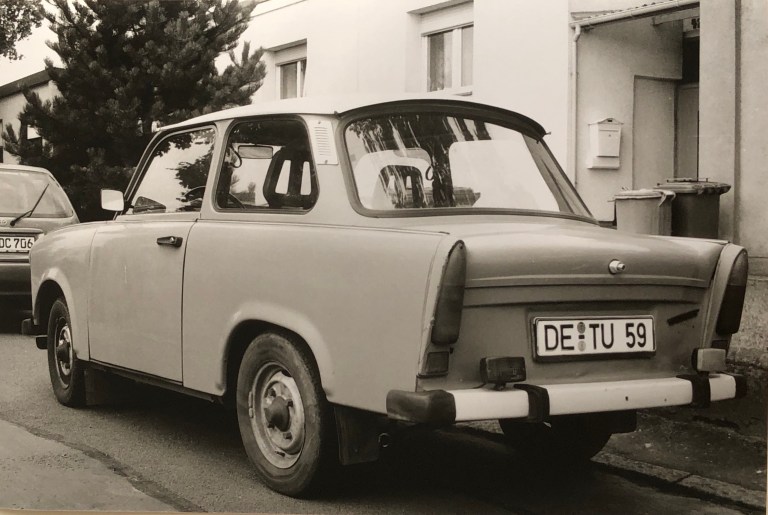
Whatever mode you pick, one thing is for sure: the EOS 500N knows how to expose correctly. You can see this by some photos here, with strong directional sunlight and shadows that are beautifully exposed.


What’s definitely worth mentioning is that this is an entry-level camera, yes, but stuff you’d expect only for more serious, higher tier cameras, the EOS 500N has got many of them.
There’s exposure bracketing, exposure compensation, exposure lock, multiple exposure mode, single or multiple focus points selection… You name it.

Autofocus modes are equally not forgotten. There’s Single-Shot AF for static subjects or if you are into something more dynamic, there’s AI Servo AF with predictive tracking for moving subjects.
It all sounds advanced, but in real life?.. With the kit-lens, AF is slow and sometimes it hunts.
To be fair, normally it gets there. No problems for still subjects, just a bit slow. If there is not enough contrast, it will hunt and you just need to find something adjacent, focus and recompose.
There are 3 focusing points in horizontal arrangement, they are good and more than enough.
The selected AF point won’t light up in the viewfinder screen, but there’s a small LED strip in the bottom that shows it, together with basic exposure data like shutter speed and aperture. When AF is reached you hear a beep beep confirmation sound. Make sure to turn that off.
There is also an annoying light that turns on — the AF assist light — for dark environments. It is horrible and the most inconspicuous thing ever invented. In dimly lit places where I know the AF will hunt forever, I just switch to manual focus.


Manual focusing is okay if you have good eyesight, as there is no visual assist. You lock focus with your eyes.
The thin plastic front barrel of the lens is what you turn for manual focus. It feels cheap, like turning the barrel of a cheap toy telescope… But it works ok.
It actually turns during AF as well. This kit lens does not have internal movement, it grows bigger or smaller and the front member rotates whenever you zoom or focus.
Click-clack-geeez!
When you press the shutter button, you get the usual click-clack-geeez. That’s the mirror and shutter mechanism followed by the film advance. It doesn’t sound sexy, unlike high end cameras. It’s sounds and feels hard, with not much dampening.
The winding and film advance is not the fastest. It’s slow and noisy, no different from average point-and-shoots. There is a continuous shooting mode when you set the camera to sports mode: you get 1 fps. Yeah.
What else
There is not much to say. The EOS 500N functions extremely well and it is reliable.
It is fully made of plastic, so what? It survived all those years of traveling and field reporting for my projects.
Nowadays we give too much importance to weather sealings and specs camera brands sell us. Unless you are a photojournalist in a war zone with RPGs exploding around you, I guess most plastic cameras are good enough for whatever hardcore assignment we give them. These things are solid.
I was a backpacker back then. I strolled around all day, slept in the streets a few times because I could find no decent place to stay with my friends. We were students.
Sure it was not war zone, but then we were not moving around a protected walled garden either. The camera would bump here and there, fall from places, get wet.
I’d toss it on the floor when I was tired. I’d shove it down my backpack. Whatever. I never treated this camera with big, fluffy hands. This was a tool I took everywhere.
And it survived.


And it aged well
This was almost 30 years ago. Checking the camera now, I can see the scratches on silver paint of the plastic body.
The rubber on the grip and the lens barrel has dried out a bit. There are visible gaps in the body where the rubber has shrunk. On the lens, it dried to the point of showing white stains.
Yet it works extremely well to this day. I put on a pair of 3V CR123A batteries and woke her up. The sound of the film advance motor and AF mechanism put a smile on my face: so many memories!
Bottom line, the Canon EOS 500N is a very good camera. It is reliable, practical, light and relatively small.
And you can take beautiful pictures with it!